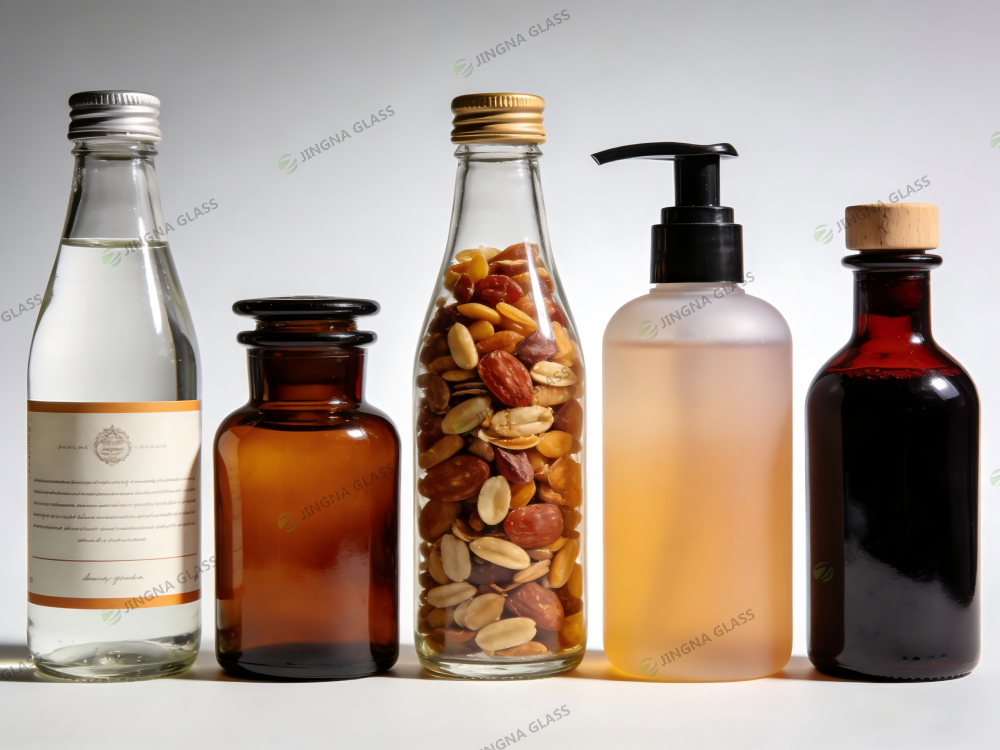
As a widely used storage container, the value of glass bottles is closely related to their material. The material directly determines key properties such as transparency, strength and hardness, heat resistance and air permeability. This is also an important basis for the selection of materials for glass bottles in different scenarios. Transparency is the key to displaying the contents of glass bottles, especially for categories such as food and cosmetics that emphasize appearance display. The composition and treatment method of glass determine the transparency effect. Among them, borosilicate glass has better transparency than soda-lime glass. Through heat treatment, the transparency of the glass can be further enhanced, making the color and texture of the contents clearer. Strength and hardness ensure that glass bottles can withstand the weight of stored items and external pressure. Soda-lime glass, due to its lower hardness, is more fragile than borosilicate glass. Even slight external pressure can cause it to break. Moreover, the cooling rate of the glass and the processing method will further affect these two properties. Heat resistance is a core indicator for use in high-temperature scenarios. The storage of pharmaceuticals and laboratory reagents has high requirements for heat resistance. Borosilicate glass, due to its low coefficient of thermal expansion, has far better heat resistance than soda-lime glass, but its manufacturing cost is relatively higher. In addition, the material also affects the breathability. Borosilicate glass has a higher porosity and better breathability than soda-lime glass, making it more suitable for storage in environments that require breathability, such as wine-making and acetic acid fermentation. The performance differences of various materials have clearly defined the applicable scenarios of glass bottles and also provided a clear direction for material selection.