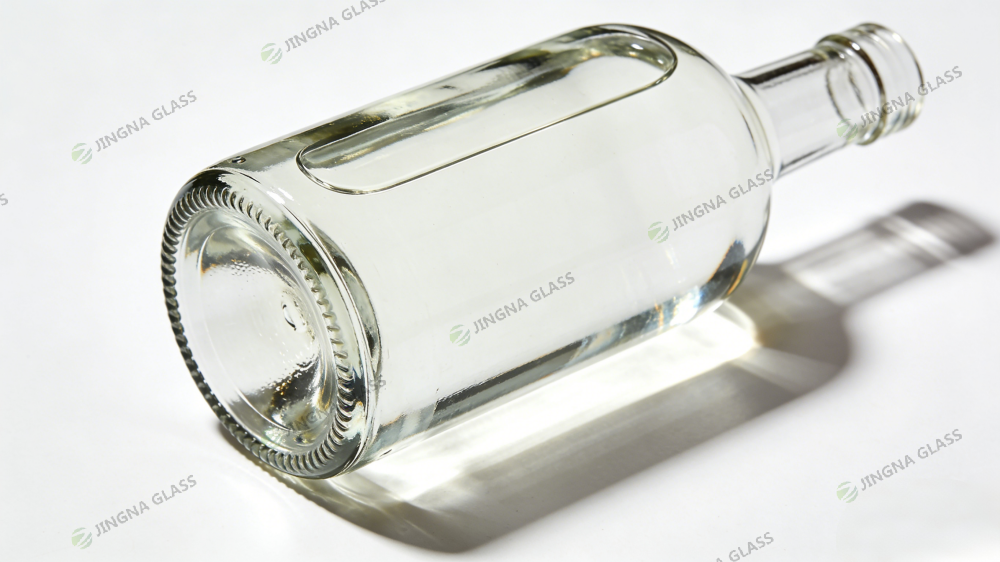
Glass bottles, as widely used packaging containers, have transparency as a key characteristic that affects both their aesthetics and practicality, and this feature is closely related to the thickness of the bottle.
Essentially, transparency refers to the extent and depth to which a substance allows light to pass through. For glass bottles, their basic transparency is determined by the raw materials used in production and the processing techniques. After raw materials are melted at high temperatures, they will form different types such as tempered glass and heat-treated glass. The material composition and process differences of these glasses will first determine the basis of their light transmission performance.
On this basis, thickness becomes an important factor in adjusting transparency. The general rule is that the thicker the glass bottle is, the higher its strength will be, but its transparency will decrease accordingly. This is because when light passes through thicker glass, it undergoes more refractions and scatters, reducing the amount of light that can penetrate smoothly, and thus appears more hazy visually. Conversely, the thinner the glass bottle, the less obstruction it encounters when light passes through, and the higher its transparency. However, the corresponding strength will also decrease, making it more prone to damage due to external force impacts.
This correlation between thickness and transparency as well as strength determines the applicable scenarios of glass bottles of different thicknesses. When manufacturing, manufacturers will precisely control the thickness according to the intended use. For instance, glass bottles used for storing and transporting highly fragile liquids would opt for a thickened design, sacrificing some transparency in exchange for sufficient strength to ensure safety during transportation and use. For packaging personal care products, food and other items that need to be displayed, thinner glass bottles are adopted to enhance the visual appeal of the goods through high transparency.
For consumers, when choosing glass bottles, they should also follow this rule and find a balance between transparency and strength based on their actual usage needs.