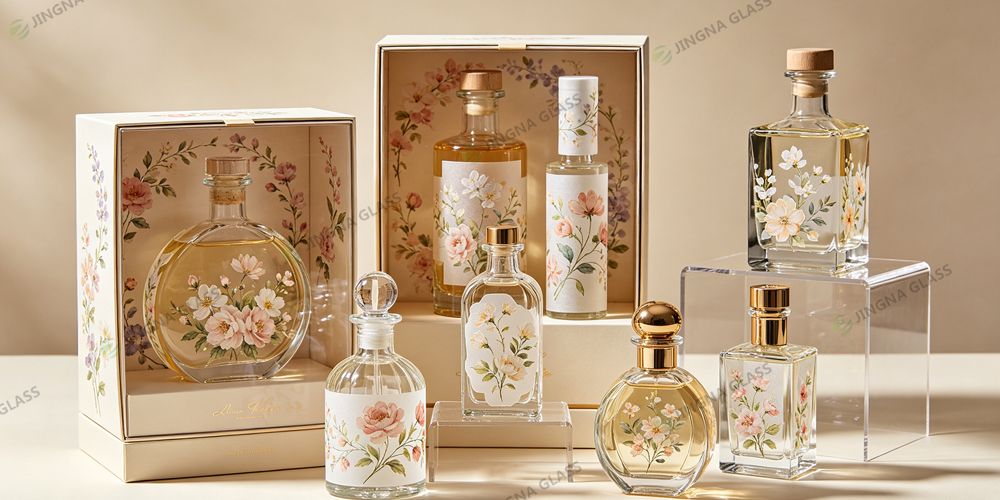
The decorative effect of the enameled glass bottle is rich and it is widely used in the packaging of Baijiu, fruit wine, gifts and food. The firmness of the enameled layer is the core indicator for judging the quality.
During the selection process, the quality inspection report of the glass base material should be verified first. Food and beverage packaging products must comply with the GB 4806.5-2016 standard. Take samples to inspect the flower surface of the bottle body to check for any missed printing, bubbles or lifted edges of the flower paper. When customizing products, it is essential to make samples first to confirm the baking effect and printing adhesion before mass production to prevent problems such as pattern peeling and color fading in large quantities.
During the transportation and storage stage, the bottle bodies are isolated from each other with pearl cotton and paper trays to prevent friction and scratches on the burnt surface. The warehouse should be kept cool and dry, avoiding direct exposure to high temperatures. High temperatures can accelerate the aging and peeling of the baked flower layers. The stacking height should not exceed five layers.
When filling, control the temperature difference between the bottle body and the material to no more than 60℃ to prevent the glass from cracking due to thermal expansion and contraction. Do not use hard tools such as steel wool balls for cleaning to prevent wear and tear on the patterns. Use sponges or soft cloths for cleaning. The surface of the embossed paper should not be in long-term contact with strong acid or alkali substances, as it will corrode and damage the coating of the embossed paper.