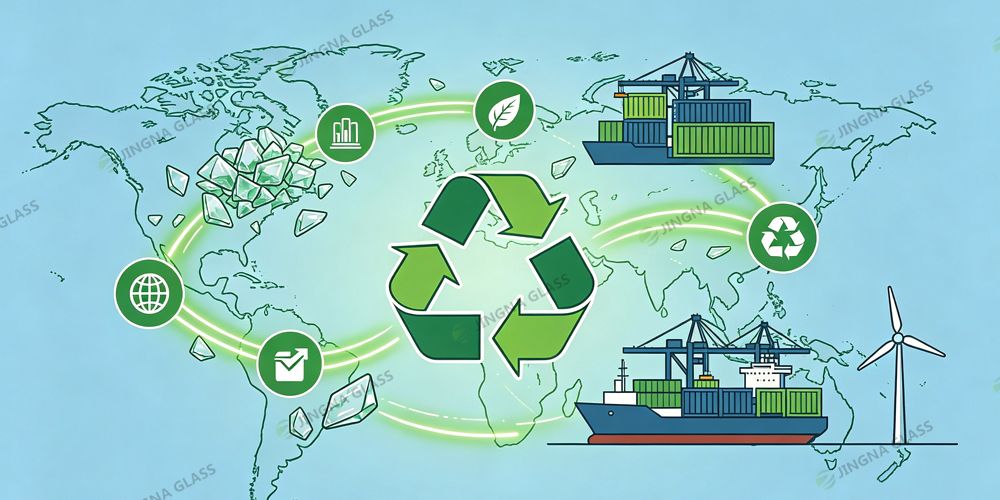
The ubiquitous beverage, sauce and craft glass bottles in daily life are not useless waste after being discarded, but indispensable recycled raw materials for the global glass manufacturing industry. The core value of glass bottle recycling lies in significantly reducing production energy consumption and filling the gap of industrial raw materials. This is also the key reason why overseas glass manufacturers continue to import recycled crushed glass.
The production of virgin glass requires high-temperature smelting of quartz sand, soda ash and limestone, with extremely high energy consumption throughout the process. In contrast, the crushed glass from recycled glass bottles has a lower melting point and can be directly put into the furnace for further production. Industry data shows that the electricity saved by recycling a single ordinary glass bottle is sufficient to light a 100-watt bulb for four hours, run a computer for 30 minutes, or play a TV for 20 minutes. After large-scale recycling, the energy-saving effect has grown geometrically. For every 10% of recycled glass input, energy consumption can be reduced by 3% and carbon emissions by 7%, which can help factories cut production costs in the long term and meet the global carbon-neutral production requirements.
Glass material has the characteristic of infinite recyclability. Repeated remelting will not cause material degradation. Colorless, brown and green glass bottles can be classified and recycled respectively to produce corresponding packaging containers, and there is no problem of quality loss after plastic recycling. At present, many countries in Europe, America and Southeast Asia have introduced environmental protection regulations for packaging, mandatore the addition of recycled glass raw materials in products. The demand for the import of clean sorted waste glass from overseas glass packaging enterprises continues to rise.
In addition, recycling glass bottles can reduce mineral extraction, lower the vegetation damage and dust pollution caused by sand and gravel mining, and meet the ESG sustainable procurement standards of overseas brands. Many food and beverage export brands prefer to use glass bottles with high recycling content to enhance the environmental competitiveness of their products.
Discarded waste glass bottles at will will remain in the soil and water sources for a long time and be difficult to degrade naturally. A formal recycling system can not only avoid solid waste pollution but also build a stable supply chain for recycled raw materials. Whether it is a glass manufacturing factory, a waste recycling trader, or a beverage packaging brand, participating in glass bottle recycling can achieve a win-win situation of environmental benefits and commercial profits, and it is the mainstream development direction of global circular trade.