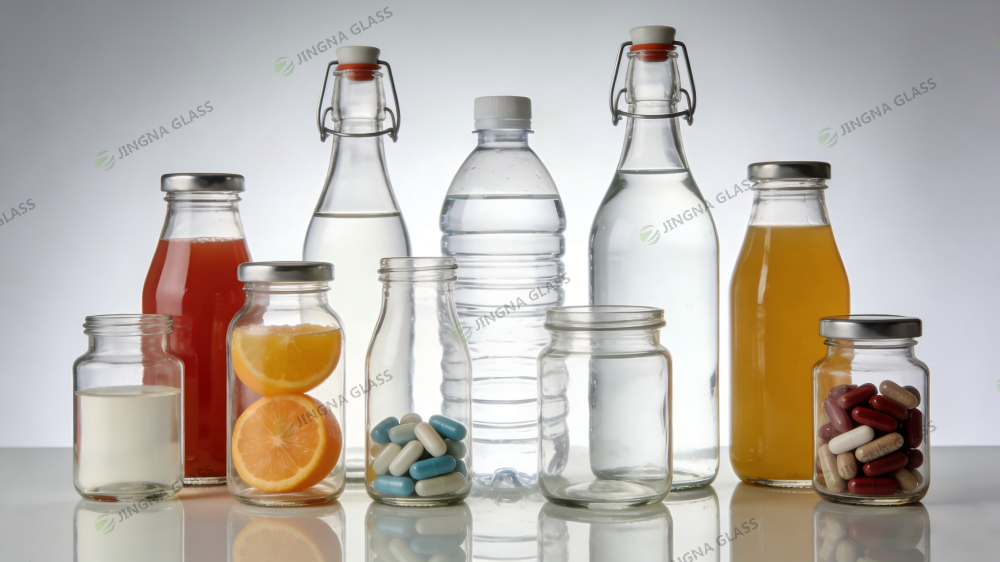
As the core packaging carrier for food, beverages and medicines, the safety of glass bottles lies in the strict selection of raw materials, which is the first key line of defense for manufacturers to ensure packaging safety. Manufacturers should give priority to using glass raw materials that comply with relevant national standards. The core properties must be heat resistance, pressure resistance, and acid and alkali resistance to ensure that the glass bottles are not easily damaged during the subsequent packaging, transportation, and use processes, and to prevent leakage or contamination of the contents.
The chemical composition testing of glass raw materials is of Paramount importance. Core raw materials such as quartz sand, soda ash, and feldspar must undergo professional component analysis to strictly control the content of heavy metals like lead, cadmium, arsenic, and antimony. The use of raw materials containing harmful substances must be strictly prohibited to prevent the migration of harmful substances into food and medicine, which could endanger human health. Among them, the silica content of quartz sand used in food-grade glass bottles should be ≥99%, and the sodium carbonate content of soda ash should be ≥99.2%, to control the purity of raw materials from the source.
Meanwhile, manufacturers should establish a strict raw material procurement review mechanism, screen high-quality suppliers and request quality inspection reports. They should conduct sampling tests on each batch of raw materials, and only those that pass the tests can enter the production process. Whether it is a food bottle or a medicine bottle, the selection of raw materials must be in line with the usage scenarios. The raw materials for medicine bottles also need to meet the additional medicinal standards of no arsenic and no antimony leaching, making the raw materials a solid foundation for the safe packaging of glass bottles.