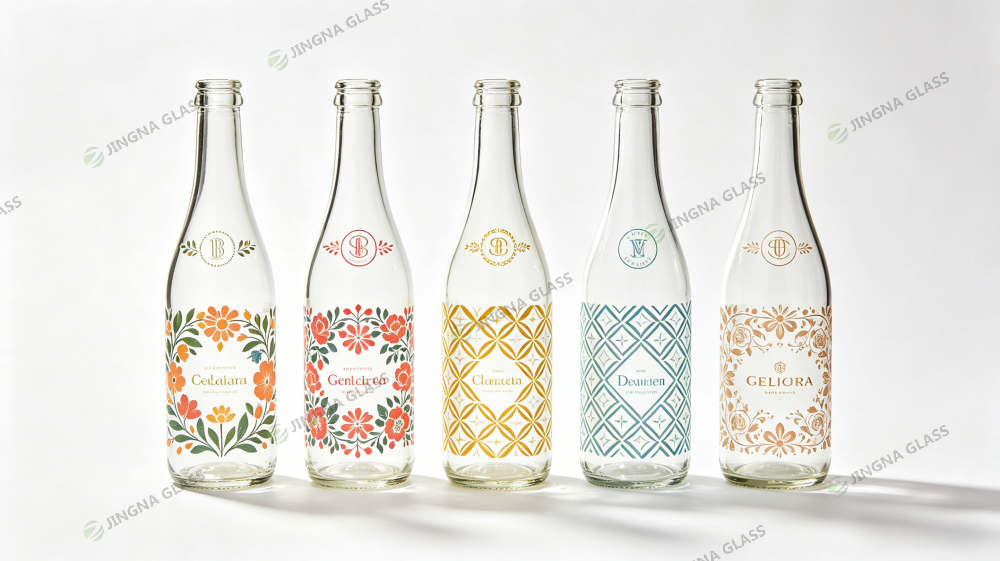
The glass wine bottle embossing process is a processing method where patterns are decorated on the surface of the bottle and then the colored glaze is firmly adhered through high-temperature baking. This process first prints the designed trademarks, patterns and other designs on the surface of the wine bottle through silk-screen printing, decal application and other methods. The material used is a special glass glaze with strong adhesion and rich colors. After printing is completed, the wine bottles need to undergo low-temperature drying to remove moisture and solvents from the patterns, ensuring that they do not bubble or fall off during baking.
The baking process is the core. The temperature needs to be precisely controlled between 580 and 600 degrees Celsius. This temperature not only allows the glaze to fully melt and closely bond with the glass surface but also prevents the glass from deforming. During the baking process, the glaze gradually penetrates the surface of the glass. After cooling, a smooth, wear-resistant and corrosion-resistant decorative layer is formed. The patterns will not fade or fall off due to wiping or collision.
Combined with screen printing technology, complex effects such as hollowing out and gradient can also be achieved. First, print the pattern composed of the dye inhibitor on the bottle body. After drying, perform overall baking. The dye inhibitor area will not be colored. After cooling, remove the dye inhibitor, and a transparent hollowed-out pattern will be formed, which contrasts interestingly with the colorful patterns.
The wine bottles after baking are both aesthetically pleasing and practical, making them suitable for high-end wine packaging. When storing the pattern in daily life, avoid sharp objects from scratching it. For cleaning, just wipe it with a soft cloth dipped in warm water to keep the pattern bright for a long time.