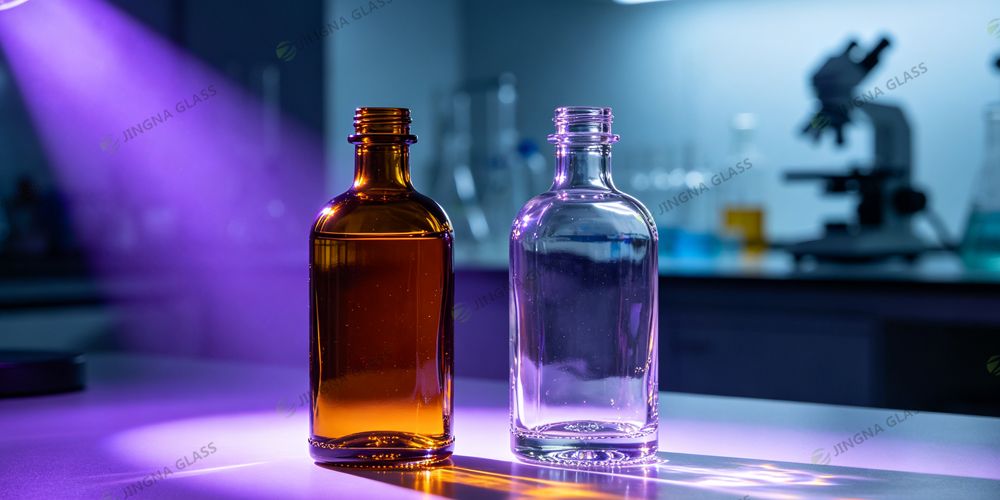
Ultraviolet rays are the invisible killer of the flavor of alcoholic beverages. When alcohol is exposed to ultraviolet rays for a long time, the organic substances inside will undergo oxidation reactions, causing off-flavors and spoilage, and shortening the shelf life. When choosing glass bottles, many beverage manufacturers are often torn between amber bottles and transparent ones, as the protective capabilities and display effects of the two are quite different.
Amber glass can block most ultraviolet rays and has outstanding protective performance, making it very suitable for dark spirits such as whisky, brandy and rum. This type of wine is rich in phenols and aromatic substances and is highly sensitive to light. Once exposed to ultraviolet rays, its aroma tends to dissipate easily and an unpleasant solar smell may also occur. Amber bottles can provide stable protection for spirits during long-term storage, ocean transportation, and in the lighting environment of offline supermarkets, reducing the risk of deterioration.
However, transparent glass bottles do not have the ability to block UV rays and cannot block ultraviolet light. Its advantage lies in its transparent texture, which can directly display the color of the wine body. It is suitable for light-colored wines such as vodka, some white wines, and gin. This type of wine highlights the visual selling point of being clear and bright. The brand needs to attract customers with the color of the wine itself. Choosing a transparent bottle is more conducive to product display.
Of course, there are certain prerequisites for transparent bottle packaging. The finished products should be stored, transported and displayed away from strong light, and should be placed in a light-proof environment as much as possible. Many foreign trade customers will pair outer boxes and light-proof labels to make up for the protective shortcomings of transparent bottles.
In simple terms, for spirits that prioritize flavor preservation and long-term storage, choose amber bottles. For light-colored wines that need to showcase their body and be well protected from light, transparent glass bottles are a better choice. There is no absolute superiority or inferiority in packaging. The most suitable solution is to combine the type of wine, the circulation environment and the brand display requirements.