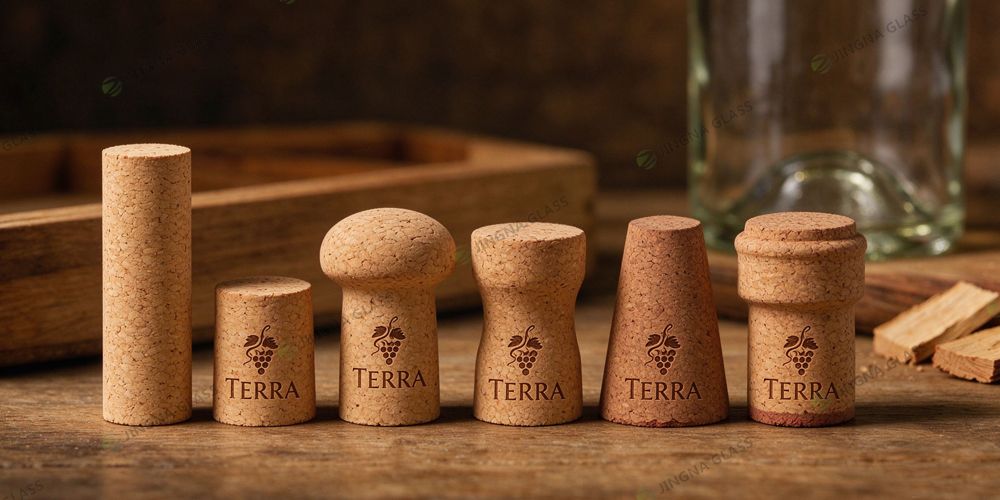
In the packaging solutions for spirits and wine glass bottles, natural cork stoppers have long occupied an important position. It is made from the bark of the cork oak tree and is filled with tiny pores inside. A small amount of oxygen can slowly enter the bottle, promoting the slow maturation of the wine and enriching the aroma layers. This is also the core reason why many high-end aged wines prefer to choose it. Natural cork stoppers have excellent elasticity. After being squeezed and inserted into the bottle mouth, they can closely adhere to the bottle wall, providing a stable sealing performance. Their retro texture also aligns with the brand tone of high-end beverages, and visually, they are more likely to appeal to overseas buyers who pursue traditional styles.
However, the shortcomings of natural cork stoppers should not be ignored either. Raw materials are restricted by the growth cycle of trees, and differences in density and sealing performance are likely to occur between batches. The most worrying issue is the risk of TCA cork contamination. Once it occurs, the wine will develop a musty smell, directly ruining the flavor of the wine. At the same time, it has high requirements for the storage environment. The wine bottles need to be placed horizontally to keep the cork moist. In a dry environment, it is prone to shrinkage and leakage, which will shorten the shelf life of the wine. The procurement cost is higher than that of screw caps, and the threshold for customizing specifications is relatively high. The preparation cycle for large quantities is also longer.
Overall, natural cork stoppers are more suitable for wines that emphasize aging and are positioned in the mid-to-high-end market. If your product is ready-to-drink spirits with a fast circulation and turnover rate and unstable storage conditions, you should choose it carefully. Beverage manufacturers and glass bottle purchasers need to make a comprehensive assessment based on product positioning, distribution channels, and storage methods, and should not rely solely on traditional impressions to make choices.