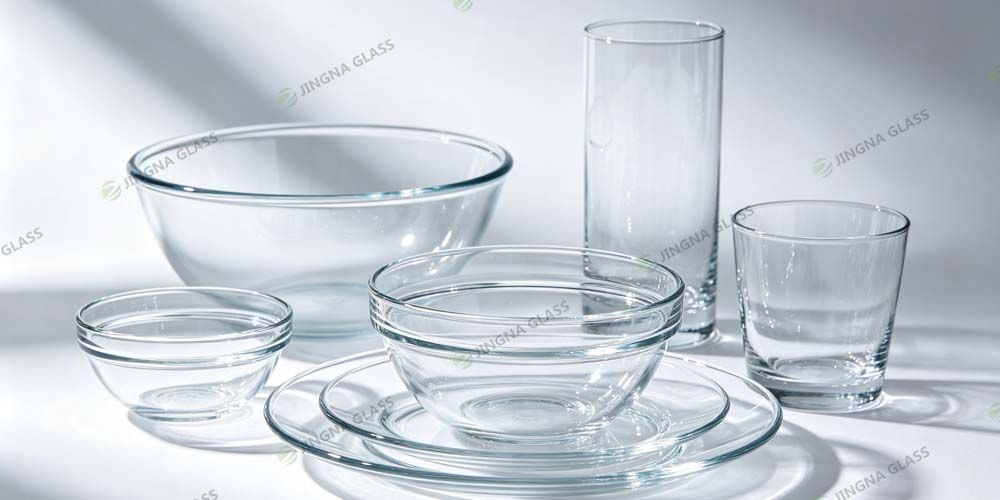
The glass bottles in circulation on the market are mainly divided into two types: ordinary soda-lime glass and high borosilicate glass. Many consumers only focus on the price when making a purchase, ignoring the usage risks brought by the material differences. Most ordinary glass is raw material glass, which contains a large amount of impurities and trace amounts of harmful ions inside. Its heat resistance temperature difference is only about 75℃. It is very easy to crack when the temperature alternates between cold and hot. For example, water cups that crack as soon as boiling water is poured in are mostly ordinary glass products. When acidic beverages such as vinegar and fruit juice are stored at high temperatures, low-quality ordinary glass may also leach out heavy metals, which can be harmful to health if used for a long time.
High borosilicate glass is a type of refined glass. Its production uses high-purity silicon-boron raw materials and does not contain harmful substances such as lead and cadmium. It has an extremely low coefficient of thermal expansion and can withstand sudden temperature differences of around 150℃. Even if it is directly poured into boiling water after being refrigerated, it will not crack. In terms of appearance thickness, high borosilicate bottles of the same capacity are thicker, but they have higher raw material purity and fewer impurities, resulting in a lower overall density. When held in hand, they are actually lighter than ordinary glass. Ordinary glass is rich in impurities, has a high density, feels heavy to the touch, and has poor light transmission. Upon closer inspection, there will be fine bubbles and fog spots.
High-temperature resistance is the most obvious difference between the two. The tolerance limit of ordinary glass is only 200-300℃, and it is very likely to crack when the temperature exceeds it. The softening point of high borosilicate exceeds 800℃, making it suitable for use in ovens, electric cookers, and laboratory vessels. However, the production process of high borosilicate is complex, the raw material cost is high, and the selling price of the finished product is higher than that of ordinary glass.
Finally, it should be reminded that when choosing glass bottles, it is advisable to prioritize products from reputable manufacturers. Most of the low-priced bulk glass containers on the street are of inferior quality and ordinary glass, lacking quality inspection guarantees. Long-term storage of food and beverages poses safety risks.